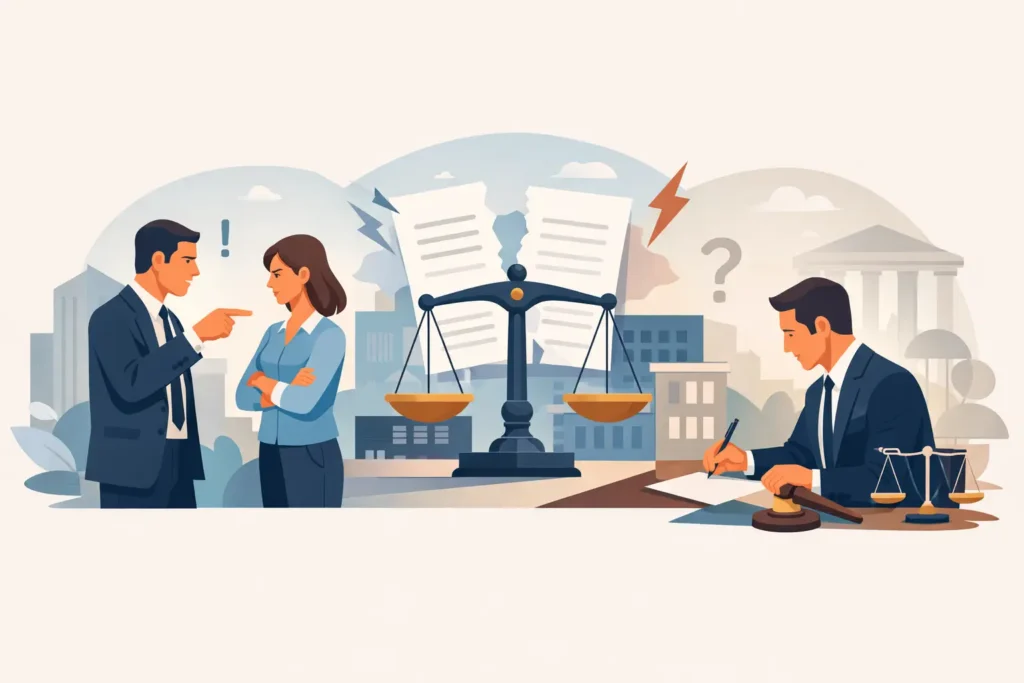
A rent increase arrives without warning. A landlord says you breached the lease. A tenant stops paying and claims the space was unusable. In each of these situations, a commercial lease dispute lawyer can make the difference between a controlled legal response and a dispute that disrupts operations, cash flow, and long-term business plans.
Commercial lease disputes rarely turn on one dramatic issue alone. More often, they grow out of lease language that seemed clear at signing but becomes contested when business conditions change. The stakes are often high because the dispute affects not only money owed today, but also possession of the premises, future liability, business continuity, and negotiating leverage.
Why commercial lease disputes become expensive so quickly
A commercial lease is not just a rental arrangement. For many businesses, it is a core operating contract. The location may be tied to customer traffic, logistics, staffing, licensing, signage, build-out obligations, or franchise requirements. If a conflict develops, the legal issue is usually only one part of the problem.
That is why early legal review matters. A dispute about maintenance responsibilities may also involve insurance coverage, interruption of business, indemnity provisions, and notice requirements. A disagreement over common area charges may seem like an accounting issue, but it can become a default claim if the lease allows the landlord to impose penalties or terminate after nonpayment.
The right legal strategy depends on what the lease actually says, what notices have already been sent, and whether the other side has preserved or weakened its position through delay, waiver, or inconsistent conduct.
What a commercial lease dispute lawyer actually does
A commercial lease dispute lawyer does more than file a lawsuit or respond to one. In many matters, the most valuable work happens before a case reaches court. That includes reviewing the lease and amendments, assessing default provisions, evaluating correspondence, and determining whether a practical business solution is still possible.
In some cases, the goal is to enforce strict lease rights quickly. In others, litigation is technically available but commercially unwise. A business may need time to relocate, preserve a customer-facing location, avoid reputational damage, or maintain a relationship with a major property owner. Strong legal advice should account for those realities instead of treating every dispute as a pure legal contest.
Counsel can also help frame the dispute correctly. Parties often focus on the symptom rather than the legal issue that will control the outcome. For example, a tenant may believe the problem is unfair rent pressure, when the decisive question is whether the landlord followed the lease notice procedure. A landlord may view the issue as unpaid rent, while the tenant’s defense may hinge on failure to deliver the premises as promised.
Common disputes in commercial leases
Nonpayment and default claims
The most obvious disputes involve unpaid rent, additional rent, tax escalations, operating expenses, or late fees. But even straightforward payment cases can become complicated if the parties disagree about offsets, abatements, repair obligations, or prior verbal understandings.
A tenant who withholds payment to force repairs may believe that approach is practical. Under a commercial lease, it can also trigger a default with serious consequences. On the landlord side, aggressive enforcement may appear justified but still fail if notice and cure provisions were not followed precisely.
Repair, maintenance, and condition of the premises
Many disputes start with a simple question: who was supposed to fix this? Water intrusion, HVAC failure, structural damage, code issues, or deferred maintenance can stop a business from functioning normally. The lease may divide responsibility among landlord, tenant, and sometimes other occupants or contractors.
This is where careful reading matters. Terms like maintenance, repair, replacement, and compliance are not interchangeable. A lease may place day-to-day maintenance on the tenant while reserving structural repairs to the landlord. It may also shift obligations back to the tenant if damage was caused by the tenant’s use, alterations, or contractors.
Use restrictions and exclusive rights
Retail, restaurant, medical, industrial, and franchise tenants often depend on use clauses. If a landlord allows a competing business in violation of an exclusivity provision, the tenant may have a serious claim. If a tenant operates outside the permitted use, the landlord may allege default.
These disputes often involve more than plain reading of the lease. They may require analysis of how the business is actually operating, what representations were made during negotiations, and whether the challenged use is material or technical.
Renewal, termination, and holdover
Option periods and renewal rights regularly lead to conflict. A party may assume a renewal occurred automatically when the lease required formal notice by a strict deadline. A landlord may reject a renewal attempt over a claimed prior default. A tenant may stay in possession after expiration and argue that negotiations created a new agreement.
Timing matters here. Missing a notice deadline by a few days can change the value of a business location overnight.
When to involve counsel
Many companies wait too long because they hope the issue will settle itself. That is understandable, but lease disputes often become harder to control once a default notice, lockout threat, eviction filing, or rent acceleration demand is already on the table.
It is usually wise to speak with counsel as soon as one of three things happens: the other side claims a breach, the lease language is being read in two different ways, or the dispute begins to affect business operations. At that stage, legal review can clarify your rights before positions harden.
Early involvement does not always mean aggressive escalation. Sometimes it means organizing the facts, preserving leverage, and sending one clear letter that resets the discussion. In other cases, immediate action is necessary, particularly where access to the premises, perishable inventory, safety issues, or key deadlines are involved.
The lease language matters more than assumptions
Commercial parties often rely on business custom or prior experience with other leases. That can be risky. Commercial leases are negotiated documents, and outcomes depend heavily on exact wording.
For example, two leases may both require a landlord to maintain the property, but one may limit that duty to common areas while the other includes structural systems serving the premises. One lease may allow attorney’s fees to the prevailing party, while another may not. One may require mediation before suit, while another permits immediate enforcement.
A sound legal assessment starts with the documents, not with what either side expected the lease to say.
Negotiation, litigation, and the business decision behind both
Not every strong claim should be litigated immediately. Not every settlement is sensible either. The right path depends on cost, timing, disruption, collectability, and leverage.
If you are a tenant, preserving occupancy may matter more than winning every legal point. If you are a landlord, a fast resolution with an operating tenant may be better than a prolonged vacancy and expensive enforcement process. That is why experienced counsel looks at both the legal merits and the commercial objective.
When litigation is necessary, preparation matters. Courts and arbitrators will look closely at the lease, notices, payment history, communications, and evidence of damages. A party that has documented events carefully and acted consistently usually starts from a stronger position.
How to choose the right commercial lease dispute lawyer
A commercial lease dispute lawyer should understand both contract interpretation and the business realities behind occupancy disputes. That means more than knowing landlord-tenant terminology. It means recognizing how a lease dispute can affect financing, operations, staffing, vendor obligations, and long-term planning.
Look for counsel who can explain the legal position clearly, move quickly when deadlines matter, and stay practical when settlement is possible. Commercial lease disputes are often won through precision, timing, and strategy rather than volume alone.
It also helps to work with a lawyer who can handle the matter from early advice through formal proceedings if needed. Continuity matters when the facts are technical and the relationship between the parties has already become strained.
At Advantage, that approach is central to how disputes are handled – with clear advice, prompt action, and close attention to the client’s business goals as well as the legal merits.
A lease dispute does not have to control your business. The earlier you understand your position, the more options you usually have to protect it.