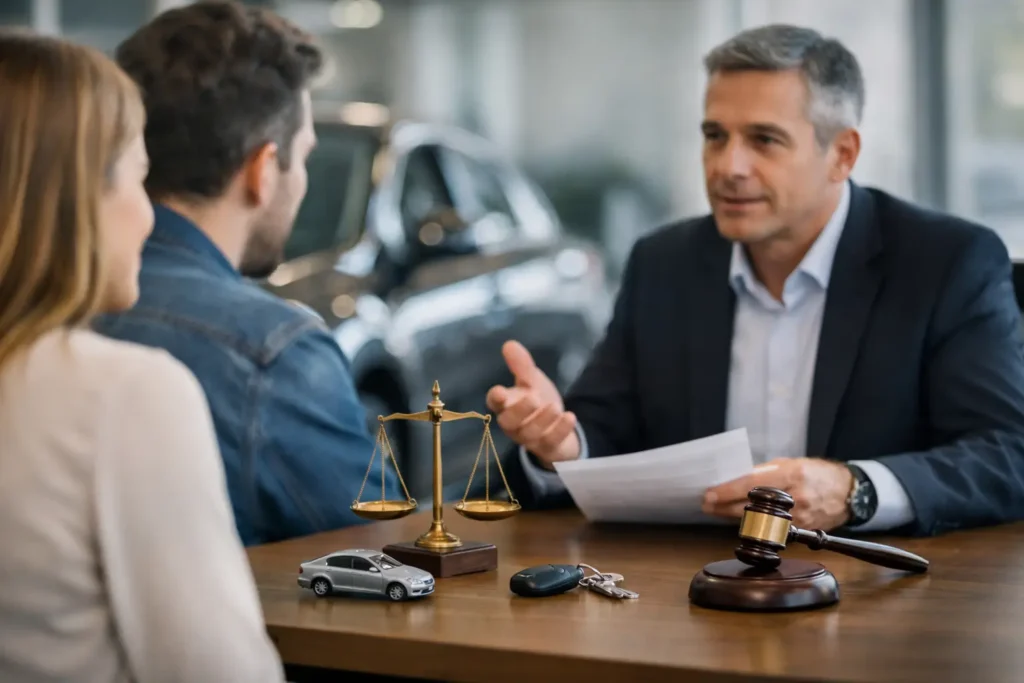
A car that breaks down a week after delivery is frustrating. A car that arrives with hidden accident damage, missing features, or financing terms that do not match what you agreed to is something else entirely. In those situations, a car purchase dispute lawyer can help you move from confusion to a clear legal strategy.
Car purchase disputes are rarely just about the vehicle itself. They often involve contract terms, oral promises made during the sale, warranty questions, advertising claims, financing arrangements, trade-in valuations, and what the dealer knew – or should have known – before the deal was signed. That is why early legal advice can make a real difference, especially when the other side is already framing the problem as ”normal wear,” ”buyer responsibility,” or ”a misunderstanding.”
What a car purchase dispute lawyer actually does
A car purchase dispute lawyer assesses whether the problem is primarily contractual, consumer-law related, or tied to misrepresentation, fraud, warranty obligations, or financing errors. That sounds technical, but the practical point is simple: before you demand a refund or accept a partial repair, you need to know what legal position you are actually in.
In many cases, the first task is to review the documentation. That includes the purchase agreement, financing documents, advertisements, text messages, email exchanges, inspection reports, warranty terms, and any records of complaints after delivery. The details matter. A dealer may rely heavily on written disclaimers, while a buyer may have a strong argument based on express promises or omissions that affected the purchase decision.
A lawyer also helps control the sequence of the dispute. Clients often contact the seller emotionally, threaten legal action too early, or agree to a ”temporary fix” that later weakens their position. A more structured approach usually works better: identify the breach, preserve evidence, make a legally sound claim, and evaluate whether settlement, rescission, damages, or court proceedings are the most effective next step.
Common disputes after buying a car
Some conflicts are obvious from the start. The car may have a major engine or transmission fault that appears almost immediately. Others take shape gradually, especially when the buyer discovers that the car had prior accident damage, an altered mileage history, water damage, unpaid liens, or missing service records.
A frequent issue is the gap between how the car was marketed and what was actually delivered. The listing may have described the vehicle as accident-free, recently serviced, or equipped with features that are not there. In other matters, the dispute centers on condition rather than description. The seller may argue the buyer accepted a used car with expected wear, while the buyer argues the defect was concealed, serious, and present at the time of sale.
Financing disputes are also common. Buyers sometimes sign documents under pressure, only to learn later that the monthly cost, interest rate, insurance package, or add-on products were not clearly presented. That can create a layered dispute involving both the seller and the finance provider. It is not always enough to focus on the car if the financing structure itself was part of the problem.
Trade-in issues add another layer. If your old vehicle was undervalued based on inaccurate statements, or the new sale was tied to conditions that were changed after the fact, the legal picture becomes more complex. These cases are often document-heavy and fact-sensitive, which is exactly where legal analysis matters most.
When a car purchase dispute lawyer is worth contacting early
Not every defect justifies immediate legal escalation. Cars can develop problems, and some disputes are resolved through ordinary warranty handling or repair. Still, there are clear situations where waiting is risky.
If the seller denies there is any fault despite strong evidence, legal advice should come early. The same applies if the dealer stops responding, blames the buyer without technical support, or offers a settlement that requires broad waivers. A quick agreement can be tempting when you need the matter resolved, but it may leave you paying for a much larger problem later.
You should also act promptly if key evidence could disappear. Diagnostic data, repair findings, advertisements, and communication records can all become harder to prove over time. If the car is repaired by a third party before the issue is properly documented, that may complicate the dispute. Speed matters, but so does doing things in the right order.
A lawyer is especially useful when the purchase price is substantial, the defect is serious, or the transaction involves business use. For companies, a car dispute can affect operations, staff mobility, and costs beyond the purchase itself. What looks like a private inconvenience can become a commercial problem with broader financial consequences.
The legal questions that often decide the case
The central question is usually whether the vehicle was defective in a legal sense at the time of delivery, or whether the seller gave inaccurate or incomplete information that influenced the purchase. That can involve written terms, statutory consumer protection, implied obligations, or direct misrepresentation.
But legal disputes are rarely decided by one question alone. Timing matters. So does knowledge. Did the seller know about the issue? Was the defect discoverable during a normal inspection? Was the buyer informed in a way that was clear and specific, or buried in standard language? Did the buyer complain within a reasonable time? Those details often shape the strength of the claim.
There is also a practical distinction between buying from a dealer and buying from a private individual. Dealer sales typically trigger stronger consumer protections, while private sales may depend more heavily on the contract wording and what was specifically represented before the sale. That does not mean claims against private sellers are impossible. It means the analysis is often narrower and more evidence-driven.
How disputes are usually resolved
Many clients assume the only options are full refund or full lawsuit. In reality, there is usually a wider range of outcomes. A dispute may end with repair at the seller’s cost, a price reduction, reimbursement for consequential expenses, unwinding the transaction, or a negotiated settlement that reflects the defect and the parties’ risk.
The right outcome depends on the facts. If the vehicle has a major hidden defect and confidence in the seller is gone, rescission may be the most sensible route. If the issue is real but limited, a price adjustment or repair arrangement may be commercially smarter. Good legal advice is not about escalating every dispute. It is about choosing the remedy that actually protects your position.
When informal resolution fails, formal claims may become necessary. That can involve written legal demands, negotiation with counsel, complaints to a relevant body, or court proceedings. The best path depends on the value of the claim, the evidence available, and how willing the other side is to engage seriously.
What to do before you speak with a car purchase dispute lawyer
If you suspect a legal problem, start by gathering the full paper trail. Save the ad, contract, warranty information, financing documents, service records, inspection reports, and all communications with the seller. Take photographs and videos if the defect is visible, and document when the issue first appeared.
Try to avoid making major repairs before the defect has been properly assessed, unless safety requires it. If the car is not drivable or could worsen with continued use, document that as well. A technical opinion can be important, but it should fit into a legal strategy rather than happen in isolation.
It also helps to write down a clear timeline. When was the car advertised, purchased, delivered, first used, first inspected, and first complained about? That sort of chronology often reveals strengths and weaknesses that are harder to see in scattered messages and receipts.
At Advantage Advokatbyrå, disputes of this kind are approached with the same focus clients expect in other complex matters: clear legal analysis, practical guidance, and a strategy that fits both the case and the client’s objectives.
Choosing the right legal help
A car dispute is often presented as a simple consumer complaint, but many are not simple at all. They sit at the intersection of contract law, sales law, evidence, and negotiation. The right lawyer should be able to assess both the legal merits and the practical leverage in the case.
That matters because winning on principle and reaching a useful result are not always the same thing. Sometimes the strongest move is a sharp, well-supported demand sent early. Sometimes it is careful preparation for litigation. And sometimes the right advice is that the claim is weaker than it feels, which can save time, cost, and frustration.
If something about the deal does not add up, trust that instinct and get the documents reviewed before the dispute hardens. A measured legal response early on often creates better options than trying to repair the situation after positions have already been locked in.