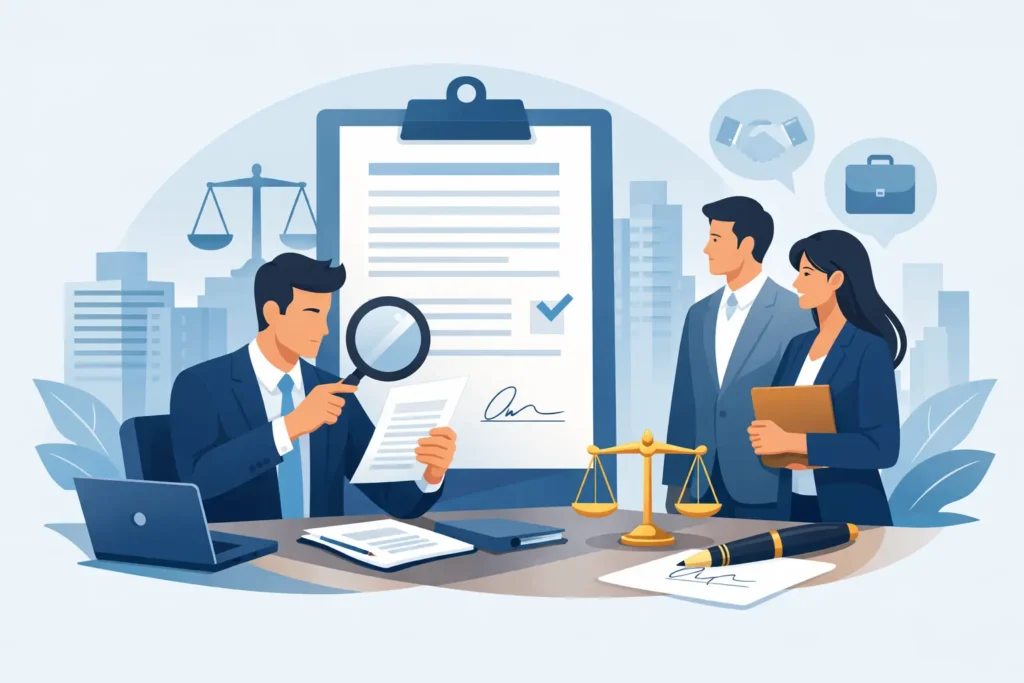
A sales contract looks fine until a payment dispute hits. A vendor agreement feels standard until service levels slip and no real remedy exists. This is where a contract review lawyer for businesses adds value – not by slowing deals down, but by spotting legal and commercial issues before they become expensive problems.
For many companies, contracts are signed under time pressure. The focus is often on getting the deal done, onboarding the supplier, hiring the consultant, leasing the space, or closing the transaction. But the legal language that seems routine often decides who carries the risk when things go wrong. A careful contract review can protect cash flow, preserve leverage, and prevent disputes that distract management and drain resources.
What a contract review lawyer for businesses actually does
Contract review is not just proofreading. It is a legal and practical assessment of whether an agreement reflects the deal the parties think they made, whether the obligations are clear, and whether the risk allocation is acceptable for the business signing it.
A strong review usually starts with context. A lawyer needs to understand what the contract is for, how important it is to the business, how replaceable the counterparty is, and what the client can realistically negotiate. A short-term low-value vendor agreement may not justify the same level of negotiation as a franchise agreement, commercial lease, construction contract, shareholder agreement, or software contract tied to core operations.
From there, the review focuses on the clauses that most often create trouble: payment terms, delivery obligations, warranties, liability caps, indemnities, termination rights, confidentiality, non-compete language, intellectual property ownership, dispute resolution, and governing law. The point is not to rewrite every sentence. The point is to identify what matters, explain the consequences in plain English, and recommend changes that are proportionate to the deal.
Why contract review matters before signature
Once an agreement is signed, leverage usually drops. That is true even where the wording is unclear or unfair. Courts may interpret ambiguous clauses, but litigation is slow, costly, and uncertain. Most businesses are better served by preventing disputes than by arguing later over what a contract was supposed to mean.
Good contract review can also improve business decisions. Sometimes the legal answer is not simply yes or no. It may be that the contract is workable if a liability cap is raised, if automatic renewal is removed, or if termination for convenience is added. In other cases, the advice may be to proceed because the legal risk is acceptable compared with the commercial upside. That balance matters. Legal advice should support business objectives, not ignore them.
There is also a timing issue. Reviewing a contract after performance has started is often too late. If your company has already begun delivering services, sharing confidential information, or making investments based on an unsigned draft, the legal position can become more complicated. Early review keeps control where it belongs.
The agreements businesses most often need reviewed
Nearly every business signs contracts, but some categories deserve special attention because they routinely affect operations, revenue, and long-term exposure.
Commercial customer and supplier agreements are obvious examples. These contracts often determine payment timing, acceptance criteria, change order mechanics, and remedies for delay or defective performance. A small wording change in one clause can materially shift risk.
Employment-related agreements also require care, especially for senior hires, consultants, commission structures, confidentiality obligations, and restrictive covenants. What is enforceable may depend on the facts, the role, and the drafting. Generic language copied from an old template is often a poor substitute for tailored review.
Leases, franchise agreements, partnership arrangements, distribution agreements, and construction contracts are also frequent sources of later conflict. In these deals, standard forms can create a false sense of security. Standard for one side often means favorable to that side.
Technology contracts deserve separate mention. SaaS agreements, software development terms, data processing clauses, service level commitments, and IP ownership provisions can affect business continuity and future growth. A company that does not secure adequate access rights, support obligations, or data protections may discover the issue only after a critical failure.
What a lawyer looks for during review
A useful contract review combines legal analysis with practical judgment. Some issues are obvious, such as unlimited liability or one-sided indemnities. Others are less visible but just as important.
Definitions are one example. If key terms are vague, the parties may be relying on different assumptions from the start. Scope of services is another. Businesses often believe the commercial discussion controls, but if the written scope is incomplete, proving what was promised becomes much harder.
Termination language is another area where problems tend to surface late. Can the other party walk away on short notice? Is there a cure period for breach? What happens to prepaid fees, transition assistance, data return, or unfinished work? These details matter most when the relationship breaks down.
Lawyers also examine how the agreement handles failure. Are there service credits, replacement rights, liquidated damages, notice requirements, exclusions of consequential loss, or caps that make recovery unrealistic? A favorable-looking contract can be far less useful if the remedy section strips away meaningful recourse.
Dispute resolution clauses deserve careful attention as well. The choice between court litigation and arbitration can have major implications for cost, speed, confidentiality, and enforcement. Governing law and venue can also shape the practical strength of a claim.
When businesses should bring in legal review
Not every contract needs line-by-line negotiation, but some situations justify involving counsel early. One is when the agreement is high value or business critical. Another is when the contract includes unfamiliar legal language, unusual risk allocation, or cross-border elements.
Legal review is also wise where relationships are sensitive. If the agreement involves founders, investors, franchise systems, landlords, strategic suppliers, or key customers, a dispute can affect more than one transaction. It can impact the business itself.
Companies should also seek review when they are asked to sign quickly. Urgency is often real, but it can also be used as leverage. A fast and focused legal review can identify the clauses that truly need attention without turning every deal into a prolonged negotiation.
For growing businesses, having a lawyer review contract templates before they are used repeatedly is often efficient. It reduces the need to renegotiate the same issues from scratch and creates more consistency across operations.
Choosing the right contract review lawyer for businesses
The right lawyer brings more than technical drafting skills. Businesses need advice that is commercially aware, responsive, and grounded in how disputes actually develop.
That means asking practical questions. Does the lawyer regularly work with business contracts, not just general legal matters? Can they explain risk clearly without hiding behind legal jargon? Do they understand when to push hard and when a workable compromise is the better outcome?
Industry familiarity can matter too. A construction company, employer, SaaS provider, franchise operator, and real estate business do not face the same contract risks. The underlying legal principles may overlap, but the pressure points are different.
Responsiveness is equally important. Contract review is often time-sensitive. Businesses need clear feedback, sensible markups, and advice that supports decision-making while the deal is still alive. That combination of legal precision and practical speed is often what clients value most in an outside adviser.
Contract review is often cheaper than contract disputes
Many business disputes start with language that seemed harmless during signing. A weak limitation of liability clause, an unclear scope, a missing exclusivity term, or an auto-renewal provision can become the center of a serious conflict months later.
The cost of reviewing and tightening a contract upfront is usually modest compared with the cost of a dispute, operational disruption, unpaid invoices, or damaged business relationships. Even where disagreement cannot be avoided, a well-drafted agreement puts a company in a far stronger position to negotiate, enforce its rights, or defend a claim.
That is one reason many companies treat legal review as part of ordinary risk management rather than an emergency measure. A contract should support the business relationship, not leave key issues to guesswork.
At Advantage Advokatbyrå, that means combining careful legal analysis with practical commercial judgment. The best contract review does not just identify theoretical risks. It helps businesses move forward with clearer terms, better protection, and more confidence in the agreements they sign.
If a contract matters to your operations, revenue, or long-term position, it deserves more than a quick skim. A short review at the right time can save a great deal of time later.