
Legal Advice in Child Custody and Parenting Disputes
Advantage Law Firm assists parents with legal matters concerning child custody, residence and contact in Sweden. Separation or divorce can create difficult questions concerning the child’s future, particularly where the parents cannot agree on legal custody, where the child should live or how contact with the other parent should be arranged.
In all Swedish custody, residence and contact matters, the best interests of the child are decisive. Particular attention must be given to risks of violence, abuse, unlawful removal of the child or other circumstances in which the child may suffer harm. The child’s views must also be taken into account according to age and maturity.
We assist clients from the initial legal assessment and discussions with family services through to interim applications and court proceedings.
REQUEST LEGAL ADVICE

Custody concerns legal responsibility for the child. A custodian is responsible for the child’s personal circumstances and must ensure that the child receives appropriate care, security, supervision, education and support.
Custody is different from residence. Parents can have joint custody even where the child mainly lives with one parent, and sole custody does not automatically prevent contact between the child and the other parent.
Joint custody means that both parents are legal custodians and share responsibility for important decisions concerning the child. These may include education, significant medical matters, passports and other important personal issues.
Joint custody does not require parents to agree on every detail. However, they must be able to deal with important matters affecting the child in a way that works for the child. Serious and persistent difficulties may lead to the question of sole custody being considered.

Sole custody means that one parent alone has legal responsibility for decisions covered by custody.
It may become relevant where the parents cannot cooperate on important matters or where other circumstances mean that joint custody is not consistent with the child’s best interests. Violence, threats, substance abuse, serious conflict or risk of abduction may all be relevant, but the court must make an individual assessment in each case.

Where the parents are not married when the child is born, the mother will generally initially have sole custody. Joint custody can subsequently be established through registration, agreement or a court decision depending on the circumstances.
The fact that the parents were not married does not affect the fundamental principle that the child’s best interests determine any later dispute.

Where the parents are married when the child is born, they generally have joint custody.
Joint custody normally continues following divorce. Separation therefore does not automatically change legal custody, and a parent seeking sole custody against the wishes of the other parent will generally need the matter to be determined by the district court.

The best interests of the child are the fundamental consideration in every custody, residence and contact matter. The purpose of the proceedings is not to determine which parent is more entitled to the child, but to identify the arrangement that is best for that particular child.
Special attention must be given to risks of violence or abuse, unlawful removal or retention of the child and other situations where the child may suffer harm. The child’s own views must also be considered according to age and maturity.

A child may live mainly with one parent or alternately with both parents. Parents who agree can decide the living arrangements themselves and may in certain circumstances enter into a written agreement approved by the social welfare committee.
If the parents cannot agree, the district court can determine the child’s residence. The assessment may include the child’s need for stability, schooling, practical circumstances and the parents’ ability to manage the arrangement.

Alternating residence means that the child regularly lives with both parents, often for approximately equal periods.
There is no automatic parental right to such an arrangement. The court considers whether the arrangement is practically and emotionally suitable for the child, including distance between the homes, schooling, activities, age and the parents’ ability to manage everyday matters.

A child has a right to contact with a parent with whom the child does not live, unless such contact is contrary to the child’s best interests. Contact is therefore primarily a right of the child rather than an unconditional parental right.
Contact may involve physical meetings but can also take place through telephone or video communication. The appropriate arrangement depends on the child’s age, relationship with the parent, previous contact and any relevant risks.

Contact may need to be limited or, in certain circumstances, not take place at all.
Where there is a concrete risk of violence, abuse, abduction or other serious harm, that risk must be weighed against the child’s interest in maintaining contact with the parent. The Swedish Supreme Court has confirmed that a risk of unlawful removal abroad can be highly relevant to decisions concerning contact.

A district court can in certain circumstances order contact to take place with contact support.
A person appointed through the social welfare authorities then assists during contact for a limited period. This may be appropriate where the child has had limited contact with a parent or requires additional security while contact is re-established.

Before commencing new court proceedings concerning custody, residence or contact, a parent will generally need to have participated in an information meeting arranged by the municipality. Evidence that the meeting has taken place is normally submitted with the application to the district court.
The purpose is to provide parents with information and an opportunity to resolve the dispute without litigation. Exceptions can apply where such a meeting cannot serve its intended purpose.

Municipal family services can provide cooperation discussions to parents who are having difficulty reaching agreement concerning their children.
Even after court proceedings have begun, the district court can ask the social welfare authorities to conduct such discussions. Courts generally seek an agreed solution where appropriate, although this may be unsuitable where violence, threats or other serious risk factors are present.

Parents who agree may in certain circumstances regulate custody, residence and contact through written agreements.
When approved by the social welfare committee, such agreements can have legal effect comparable to a court decision. The arrangement must still be consistent with the child’s best interests.

Where the parents cannot agree, one parent can commence proceedings before the district court. The proceedings may concern custody, residence, contact or several of these issues together.
The court will normally hold an initial oral preparatory hearing. If no agreement can be reached, the court may obtain further information or a formal investigation from social services and later proceed to a final hearing.

Custody proceedings can take time and the court may therefore need to decide what should apply while the proceedings are ongoing.
The court can make interim decisions concerning custody, residence or contact. Such decisions can have substantial practical importance because they regulate the child’s situation until the court decides the case finally.

Where parents remain in dispute, the district court can request a detailed investigation by the social welfare authorities.
Social workers will normally speak with the parents and often the child and may obtain information from schools, preschools or other relevant persons. The investigation will usually include a reasoned recommendation, although the final decision remains with the court.

Children must be given information and an opportunity to express their views in matters concerning custody, residence and contact.
The significance given to those views depends on the child’s age and maturity. There is therefore no fixed age at which a child simply decides where to live.

Allegations of violence, threats or abuse must be treated seriously in custody proceedings.
Swedish law specifically requires the court to consider the risk that the child or another member of the family may be subjected to violence or other abuse. Relevant evidence may include police reports, judgments, medical records, messages and other documentation.
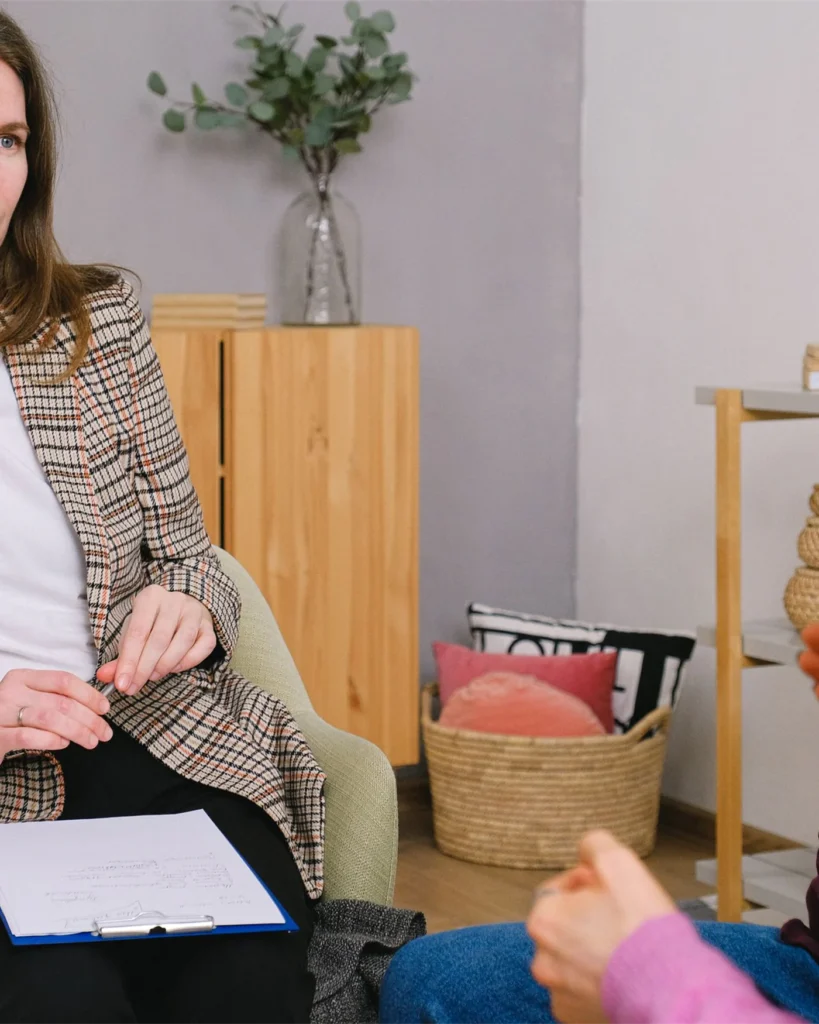
A risk that a child may unlawfully be removed from Sweden or retained abroad is also an important consideration.
Such a risk may affect decisions concerning both custody and contact. Where concrete circumstances indicate a risk of abduction, these should be presented clearly and supported with relevant evidence.

Circumstances surrounding a child may change over time. A previous judgment or agreement concerning custody, residence or contact is therefore not necessarily permanent.
A parent can seek a new determination where circumstances have materially changed, for example because of new living arrangements, serious cooperation difficulties, problems with contact or new risks affecting the child.

Where one parent fails to comply with a judgment, order or enforceable agreement concerning residence or contact, the other parent may in certain circumstances apply to the district court for enforcement.
The court may use measures such as a conditional fine and, in special cases, compulsory transfer of the child. Interim decisions can also be capable of enforcement.

Custody proceedings are not determined only on the basis of what the parents say. The court may consider extensive evidence as well as information from social services.
Relevant evidence can include communications between the parents, official documents, medical records, previous judgments, information from schools or preschools and witness testimony. Evidence should be focused on matters genuinely relevant to the child’s situation.

Where appropriate and consistent with the child’s best interests, an agreed solution can sometimes be preferable to prolonged litigation.
Relevant evidence can include communications between the parents, official documents, medical records, previous judgments, information from schools or preschools and witness testimony. Evidence should be focused on matters genuinely relevant to the child’s situation.

If the parents cannot reach agreement, the case proceeds to a final hearing.
The parents may give evidence, witnesses may be heard and documentary evidence may be presented. The district court then determines custody, residence and contact on the basis of the child’s best interests and the evidence as a whole.


Advantage Law Firm has been practising law for more than 18 years and assists clients with family law, child custody disputes and civil litigation.
We provide advice both at an early stage and where court proceedings are already underway. Custody cases often require careful handling of evidence, social welfare investigations and the practical circumstances surrounding the child.
Our litigation experience enables us to represent clients from the initial assessment and negotiations through interim applications, final hearings and further proceedings where required.

Extensive experience in family law and civil proceedings.
We analyse custody, residence and contact in light of the child's actual circumstances and the legal best-interests assessment.
We help identify documentation and evidence that is genuinely relevant to the issues before the court.
We assist where temporary arrangements are needed during ongoing proceedings.
We seek sustainable solutions where appropriate and litigate where necessary.
We have substantial experience handling cases involving witness evidence, social welfare investigations and extensive documentation.

We review the child's circumstances, previous agreements, judgments and relevant background.
We determine which applications should be made and what evidence is required.
We represent the client in negotiations, preparatory hearings and interim applications.
Where no settlement is possible, we represent the client throughout the court proceedings.
Speak to a Lawyer in Stockholm Today
Get clear legal advice within minutes. Confidential consultation
with an experienced Swedish lawyer, no obligation.
Reviews
What Our Clients Say
Posted on Google
 nesma mourssi
Trustindex verifies that the original source of the review is Google.
Arrogant bemötande, svarar inte på mail trots uppmaning till att skicka över handlingar i ett tidspressat överklagande ärende. Hänvisning ”tror inte du kommer vinna” efter begäran om svar. Tydligt att det inte tar sig an mål av mindre karaktär och total nonchalans till de.Posted on Google alexander balfors
Trustindex verifies that the original source of the review is Google.
We received excellent guidance from Alexandra at Advantage. She thoroughly helped my girlfriend and me throughout our partnership visa application. She took care of the entire application process and handled all our questions. Our visa was approved much faster than expected!Posted on Google Lindsay PeloquinAlexandra is professional, communicative and has been so helpful in assisting with my residency permit. Thank you!Posted on Google
 BreizyI had an excellent experience with Advantage Juristbyrå, especially working with Tim, who handled my case. The service was outstanding, they provide consistent follow-up, respond very quickly, and communicate effectively. Tim was always cordial and professional, making the entire process smooth and reassuring. Thanks to the expertise and dedication of Advantage Law Firm and Tim, my immigration case had a positive outcome. I highly recommend their services!Posted on Google
 Saman Mohammad Ali*Jag vill varmt tacka min advokat för allt stöd och engagemang i mitt ärende. Han har varit professionell, pålitlig och alltid tillgänglig när jag behövde hjälp. Tack vare hans insats fick jag ett rättvist resultat. Jag rekommenderar honom starkt till alla som behöver juridisk hjälp.* Saman Uppsala 💐🙏🏾💐Posted on Google
 Simon MadosonJag har anlitat Advantage i flera år och hänvisat flera av mina vänner och bekanta och vi är supernöjda.Posted on Google
 Joakim WesterlundhFantastisk hjälp direkt på telefon!Posted on Google
 Natali HramykoJag vände mig återigen till Alexandra och hennes team på Advantage Advokatbyrå , och precis som tidigare är jag mycket nöjd med deras professionalitet. De hjälpte mig att avsevärt minska betalningsbeloppet i mitt ärende med Kronofogden, vilket jag är mycket tacksam för. Stort tack för er hjälp och ert stöd! Mvh / Dzmitry B.Posted on Google
 Rounak NiranjanAlexandra at the Advantage Law Firm helped me with my work permit extension. She was professional, competent, friendly and always available to help over email and call. I'm content with the results in my case and grateful for her assistance. I would highly recommend seeking her out if you need help with matters relating to migration. :) Good luck.Posted on Google
 Laura HernándezI have handled all my cases with Alexandra for the last 3 years. She is fantastic, super organized and keeps great communication between all the parties. I'll definitely keep working with her.
Custody concerns legal responsibility for the child. Residence concerns where the child actually lives.
Yes. Joint custody does not require equal residence.
The decisive consideration is the child’s best interests. Serious conflict, violence, threats, substance abuse or other risks may be relevant.
There is no fixed age at which the child decides. The child’s views carry greater weight according to age and maturity.
No. Contact is primarily the child’s right and must not take place where it is contrary to the child’s best interests.
It means that a person appointed through social services is present to support the child during contact.
Generally yes for new custody, residence or contact proceedings, although certain exceptions exist.
Yes. The district court can make interim decisions while the proceedings are ongoing.
Social services can provide information and carry out a detailed investigation into the child’s and parents’ circumstances.
It may be possible to apply to the district court for enforcement.
Yes. Custody, residence and contact can be reconsidered where circumstances change.
Early advice is particularly important where parents cannot agree, there are allegations of violence or abduction risk, or court proceedings have already begun.

Contact a Child Custody Lawyer in Sweden
Are you involved in a dispute concerning custody, your child’s residence or contact?
Advantage Law Firm assists parents in assessing their legal position, preparing applications and evidence and dealing with family services and the courts. We provide support from the initial legal assessment through negotiations, interim decisions and final hearings.